Dunfermline District Radio
Car club currently race 1/10th Super Touring cars., as well as 1/12th
Scale Mardave Hot rods..
Electric
Super Touring 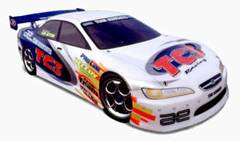
The main class raced is 4
wheel drive 1/10th Super Touring cars, with Mardave being very
popular as well. These cars are highly complex models of TOCA British Touring
Cars, having as many opportunities to modify different setup options as on a
full size race car. The cars have front and rear differentials just like your
road car. The differentials can be modified by adjusting the slippage, as well
as using different greases on the drive plates. The cars can also have
different wheel bases, optional anti-roll bars as well as altering the various
pick up points for the track rods. The cars also use oil filled shock
absorbers, which can be altered by changing the pick up points, as well as
changing the oil inside the shock body. The piston used inside the shock body
can also be changed allowing for different rates of compression. The shock
absorbers also have a coil spring on the outside of the shock body which can be
altered to give different rates. This is just some of the different mechanics
involved in setting up the cars to handle the tracks laid out to race on. On
top of all this, you have to choose a tyre, with many options available. At the
end of the day, you have a very complex car, which requires the best motors and
batteries to gain an advantage over your competitors. What mustn’t be forgotten
is that, just because you spend a lot of money on the car, this does not
guarantee a top result, as in many cases, a slower car which is setup better,
will beat a faster car which is badly setup. If you are interested in electric
radio control car racing, please visit the relevant pages on this web site .
Mardave
Hot Rod Racing 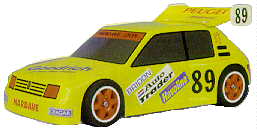
If you are interested in
radio control cars, and you have a budget of about £200, then Mardave Racing is
for you. These cars have simple flat pan chassis’, but come with a motor, speed
controller and 4 cells for approx. £70. The cars are raced nearly standard,
which results in very close racing, as the only difference is in driver
ability. There are various types of Mardave cars available, but underneath they
have the same components. The only difference being the body shell, and the way
it is mounted. At his time you can choose from a Peugeot 205, Escort, pickup
truck and V-dub. New models will no doubt arrive in the future. If you are
interested in Mardave racing, visit the relevant pages now. The club currently
sells a start pack for £185 (see latest spares list to confirm current price).
Mardave
Stock Car Racing 
If you are interested in
full size F1 or F2 stock cars, why not try 1/12th scale racing.
These cars are based closely on their full size equivalents, with racing being
organised on a Sunday afternoon. Racing takes place on an oval track, with
drivers graded by roof colour. Cars cost from £60 to £180, just add cells and
radio gear. These cars use 6 cells to power an electric motor. There are many
different shells to choose from. During racing contact is allowed, which
results in very competitive action.
1/12th
Circuit 
This class of racing is probably one of the oldest in the country and started off way back in the 1970’s. The cars we race today are 1:12th scale replicas of the modern day Le Mans prototype sports cars such as the Bentley and the Audi.
The cars are of a simple design but feature the use of latest materials such as carbon fibre and titanium. This makes them very lightweight which gives them their incredible speed and acceleration, making them probably the fastest of any of the electric classes of racing.
These cars are extremely fast and agile, this is not a beginners formula.
Electric
Off-Road 
Dunfermline District Radio
Car Club started